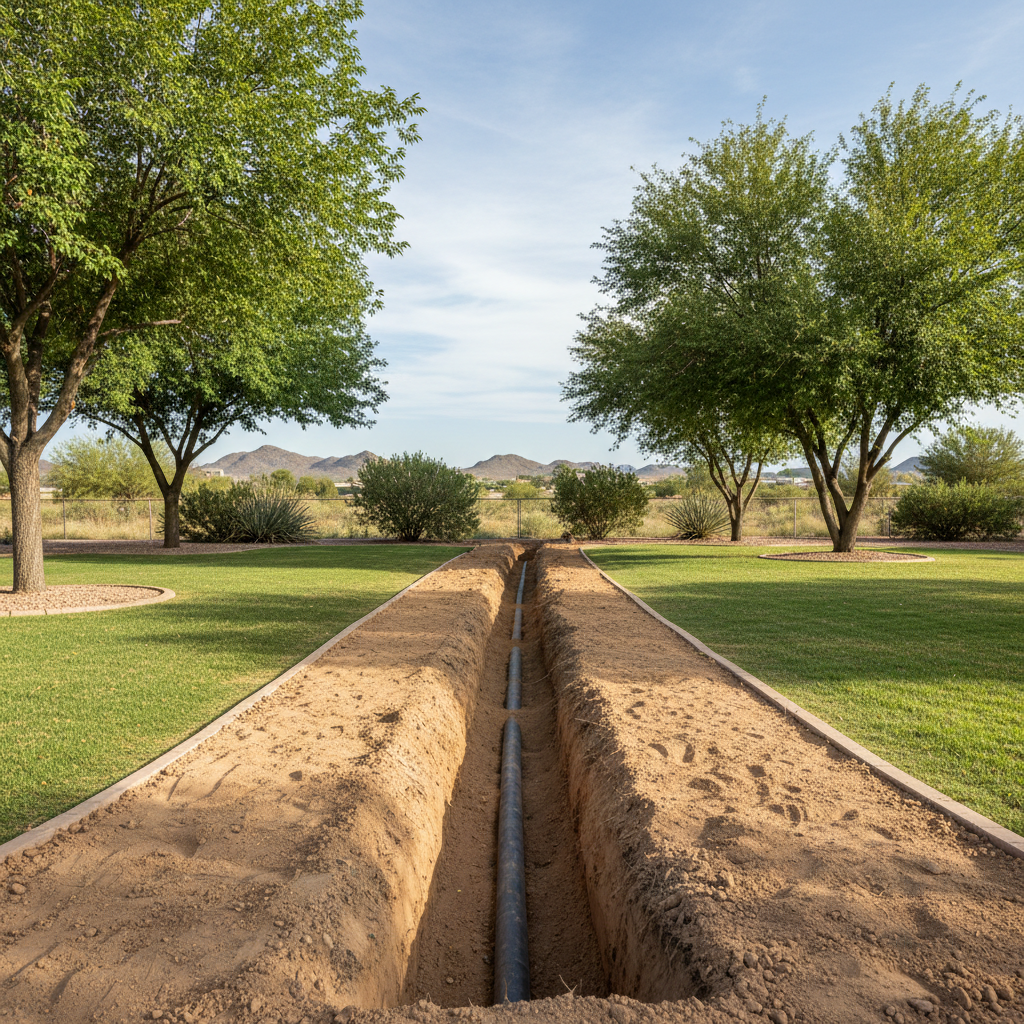
You've got utilities running to your home or business, right? Water, sewer, gas, electric, maybe even fiber optic. Most of 'em are buried in trenches, out of sight, out of mind. That's great until they're not. Here in Kingman, with our crazy soil and wild weather, those trenches need a little love to keep from becoming a major headache. I've seen plenty of good trenching work go bad because folks didn't know what to look for. Let's talk about how to keep your buried lines happy and healthy.
Extending the Life of Your Trenching Work
When we dig a trench, whether it's for a new water line or a sewer repair, we're thinking about longevity. But once we're done, it's on you to help keep that investment solid. The biggest thing you can do? Prevent heavy loads from driving over the trench path. I know, sometimes it's unavoidable, but if you can help it, don't let heavy trucks, RVs, or construction equipment roll right over where those pipes are buried. Heavy vehicles compact the soil, which can crush pipes or cause fittings to shift, especially in our caliche-rich soil that can get rock-hard and unforgiving.
Landscaping is another big one. Planting large trees or shrubs directly over a utility trench is just asking for trouble. Their roots are relentless; they'll seek out moisture and nutrients, and a tiny crack in a pipe looks like an open invitation. Keep those thirsty plants a good distance away. If you're doing any new planting, know where your lines are first. That's just common sense, really.
Regular Maintenance: What You Can Do
Regular maintenance for a utility trench isn't like changing your oil; you're not really 'maintaining' the pipes themselves. What you're doing is watching the ground above them. Walk the path of your trenches a few times a year. What are you looking for?
- Settling or depressions: If the ground above the trench starts to sink, that's a red flag. It means the backfill might be washing away or compacting unevenly, leaving your pipes unsupported.
- Erosion: Our monsoon season here in Kingman can be brutal. Heavy rains can wash away soil, exposing pipes or leaving them vulnerable. If you see erosion along the trench line, you need to address it by adding more soil and maybe some erosion control like rock or proper grading.
- Unusual plant growth: Sometimes, a lush, green strip of grass appearing suddenly in a dry area can mean a water leak underground. Plants just love that free water.
It's also a good idea to keep a map of your utility lines. If we did the work, you'll have one. If you don't, consider getting your lines located before any major landscaping or digging projects. It'll save you a lot of grief.
Warning Signs You've Got a Problem
Beyond the visual checks, other signs scream 'trouble underground.' Don't ignore these:
- Sudden drop in water pressure: Could be a leak in your main water line.
- Unexplained wet spots in your yard: Especially if it hasn't rained. This is a classic sign of a water leak.
- Foul odors: If you smell sewage, especially near a sewer line, you've definitely got a problem. That's not just unpleasant; it's a health hazard.
- Higher utility bills: A sudden spike in your water bill with no change in usage almost always points to a leak. Same goes for gas, though gas leaks are usually more obvious and dangerous.
- Slow drains or gurgling sounds: For sewer lines, these are big indicators of a blockage or a damaged pipe.
Our Kingman summers are hot and dry. A wet spot that doesn't evaporate quickly is a huge red flag. Don't just assume it's a sprinkler head; investigate it.
When to Call a Professional (Like Us)
Look, some things you can handle yourself. Patching up a little erosion, sure. But when it comes to actual utility line problems, you really need to call in the pros. Here's when you shouldn't hesitate:
- Any suspected gas leak: This isn't a DIY project. Get out, call the gas company, then call us or another qualified contractor for the repair.
- Significant ground settling or sinkholes: This indicates a major issue with the backfill or the pipe itself. You don't want to mess with structural integrity.
- Persistent water leaks: If you've got a constant wet spot or your water bill is through the roof, you need a professional to locate the leak and repair it properly. Digging blindly can cause more damage.
- Sewer line backups or persistent clogs: These often mean a break in the line, root intrusion, or a serious blockage that needs specialized equipment like a sewer camera to diagnose and fix.
- Any time you're unsure: Honestly, if you're looking at something and thinking, ---