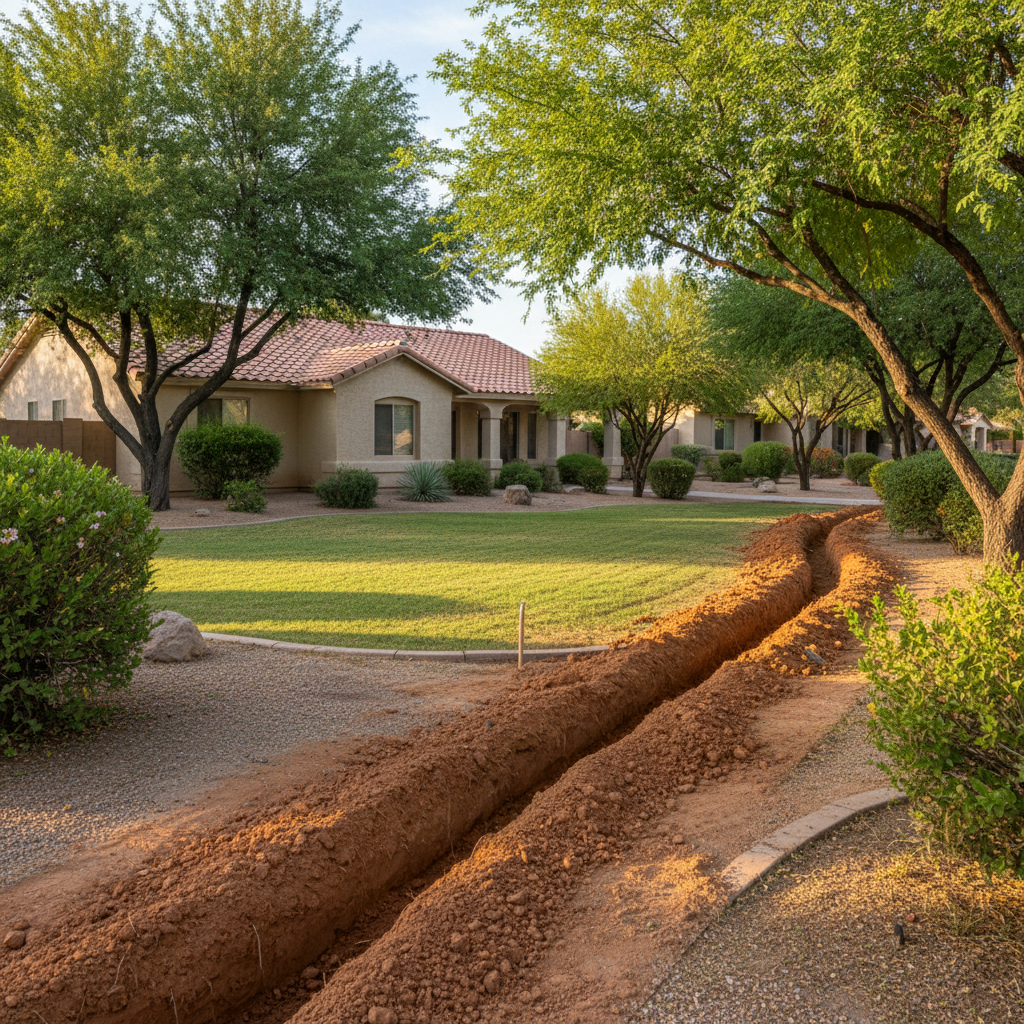
So, you've got a project in mind. Maybe you're running a new water line to that detached garage, burying some electrical for outdoor lighting, or finally getting that drip irrigation system laid out for your desert landscaping. Whatever it is, if it means digging a trench, you've really got to think smart about it. I've been doing this kind of work in Kingman for years with Aim High Excavating Co, and believe me, I've seen plenty of homeowners get themselves into a real mess. Let's talk about the biggest mistakes I see people make and how you can easily avoid them.
Mistake #1: Skipping the Call Before You Dig
This one? It's probably the biggest, dumbest, and most dangerous mistake you can possibly make. I don't care if you're just putting in a shallow trench for a sprinkler line – you absolutely, positively MUST call 811 before you dig. It's the law, for one, and it's there to keep you safe. You wouldn't believe how many times I've shown up to a property where someone's already started digging, hit a gas line, or cut a fiber optic cable. Not only is that incredibly dangerous, but the fines and repair costs can be astronomical. And trust me, hitting a high-pressure gas line in the middle of summer when it's 110 degrees out here? That makes for a very, very bad day. The utilities will come out and mark everything for free. It usually takes a few days, so make sure you plan ahead. Don't be that guy who just *thinks* he knows where everything is.
Mistake #2: Underestimating Kingman's Soil
Kingman isn't exactly famous for its soft, loamy topsoil, is it? We've got caliche out here, and sometimes it feels like you're trying to dig through concrete. I've seen homeowners rent a trencher from a big box store, figuring they'll knock out a hundred feet in an afternoon, only to find themselves fighting a rock-hard trench for days. That little walk-behind trencher might work great in some places, but around here, it's often just not powerful enough for anything more than the shallowest, shortest runs. You really need the right equipment, and often, that means something with a bit more oomph than a rental unit can offer. If you're not ready for the resistance, you'll burn out the machine, burn out yourself, or just give up. And then you're calling someone like me anyway, but now you've also wasted time and money on a rental. What a headache!
Mistake #3: Ignoring Drainage and Slope
This is super important if you're trenching for anything involving water, like drainage or irrigation. You can't just dig a straight line and call it good. You need to think about the natural slope of your property and how water will actually flow. We get those monsoon rains here, and if your trench isn't properly sloped or doesn't have a clear outlet, you're going to create a bigger problem than you started with. You'll end up with standing water, erosion, or even water flowing right back towards your foundation. I've actually seen folks dig trenches that basically act as a channel to funnel water straight into their crawl space. That's a costly fix, and it's totally avoidable with a little planning and a basic understanding of how water moves.
Mistake #4: Not Getting Multiple Bids (or the Right Bid)
When you're looking for someone to do the work, don't just go with the first guy who answers the phone. Get a few bids. But here's the real trick: don't just compare prices. Compare what's actually included. Does their bid include utility locating? What about backfilling and compaction? Will they haul away the excess dirt? Some contractors might give you a rock-bottom price, but then you find out they left a mountain of dirt in your yard, or they didn't properly compact the trench, leading to settling later on. Ask for references. Check their licensing and insurance. You want someone who's going to do the job right, not just cheap. A good contractor will explain their process and what you're getting for your money. If they can't clearly articulate that, well, that's a red flag, isn't it?
Mistake #5: Forgetting About Future Access and Maintenance
Think long-term here. If you're burying a pipe or a conduit, how will you get to it if there's a problem down the road? Sometimes it makes sense to run larger conduit than you think you need, or to install cleanouts at strategic points. Burying a critical line under a newly poured concrete patio might seem like a good idea at the time, but if that line ever needs repair, you're looking at tearing up your patio. Plan for the worst, hope for the best. It'll save you a headache and a lot of money later on. We often work on properties in areas like the Hualapai Foothill Estates, where folks are building out their dream homes and want everything perfect. Thinking ahead about access is key to keeping it perfect, you know?
Trenching isn't rocket science, but it's also not something you should jump into blindly. A little planning, a few phone calls, and choosing the right help can save you a ton of grief. Do it right the first time, and you won't have to do it again.