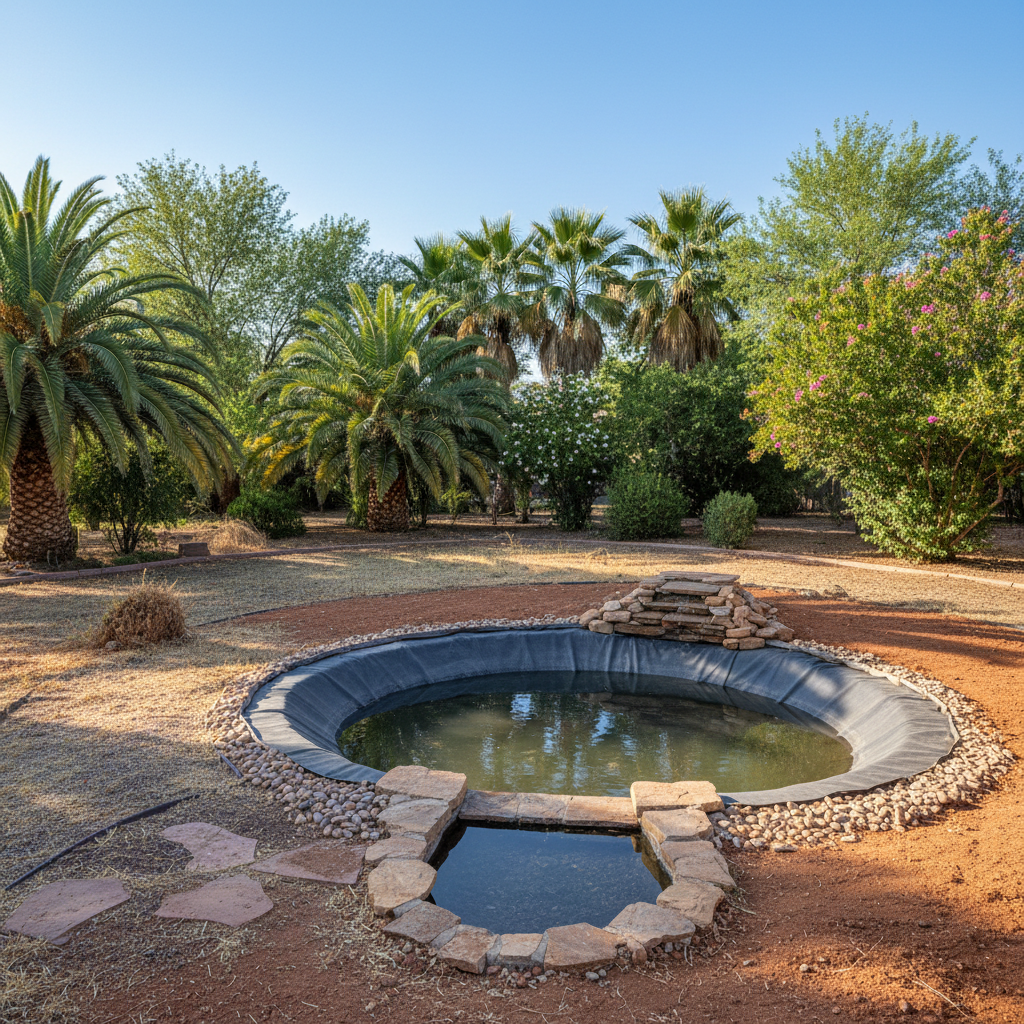
Digging into Kingman caliche soil with a standard shovel is very difficult. Anyone who has tried it knows our ground does not hand anything over easily. Adding a backyard pond to cool things down when summer temperatures soar past triple digits requires a major decision right at the excavation stage. Property owners must choose between a traditional lined pond or trying to pack a natural clay and soil bottom.
Aim High Excavating Co has dug plenty of holes across Mohave County, and our team has seen both setups age out here. These two approaches actually compare in specific ways when factoring in our brutal sun, rocky earth, and dry air.
The Lined Pond Approach
Most property owners around Desert Knolls or up near Antelope Acres end up going the synthetic route. We dig the basin, smooth out the jagged rocks, lay down thick geotextile underlayment, and drop in a heavy EPDM rubber or PVC liner.
- Cost: Upfront material costs for a quality liner and underlayment add up fast, and property owners are also paying for accurate excavation that does not leave sharp edges to puncture the rubber.
- Durability: A good EPDM liner handles shifting desert soil pretty well, but intense UV rays will destroy any exposed edges in a few seasons if they are not hidden under heavy rock.
- Maintenance: Keeping the liner clean is straightforward since the smooth surface does not trap a ton of muck, though algae loves baking in shallow Arizona water.
- Appearance: It looks neat and controlled, but property owners have to work hard to disguise the black rubber rim so it does not look like a giant swimming pool tarp in the yard.
The Natural Clay and Soil Method
Going natural means shaping the excavated earth and packing it tightly, sometimes hauling in bentonite clay if our local native soil lacks enough natural binder to hold water. It is an old-school technique that mimics a natural desert tank.
- Cost: Excavation takes a bit more finesse and compacting work. If teams have to import tons of bentonite clay because our local dirt is too sandy or rocky, material expenses jump up.
- Durability: When done right, it settles into the landscape permanently. There is no rubber to tear or degrade over time, but tree roots and burrowing desert critters can occasionally compromise the seal.
- Maintenance: It builds up a natural biological ecosystem much faster. The downside is that managing water loss through natural seepage takes a keen eye during dry spells.
- Appearance: Unbeatable. It blends right into the surrounding desert aesthetics like it has been there for centuries.
Which One Actually Makes Sense Here?
If you want a low-stress water feature that holds its water level reliably without constantly fighting our hyper-porous desert ground, a heavy-duty liner is usually the way to go. Our ground shifts too much during monsoon season flash events, and a good liner with a flexible sub-base handles that movement better than a packed earth seal that can crack when things dry out completely.
Whatever route you choose, do not skimp on the initial cut. Getting the shelves leveled right and clearing out the buried caliche boulders before the liner or clay goes down saves property owners from dealing with a sagging, leaking mess later on.